logo
Address :6258 Penfield Ave
Opening Hours

Artificial Grass Future: Synthetic Turf Installation Impact

Synthetic Turf Installation

As climate change intensifies and urban living becomes denser, traditional lawns are increasingly out of step with modern needs. Enter artificial grass, a solution that’s steadily transforming landscape architecture. With its aesthetic appeal, low maintenance, and environmental benefits, synthetic turf offers a compelling alternative. Below, we explore how this innovation is shaping outdoor design and why Synthetic Turf Installation is on the rise.

Green Aesthetics Without Hassle

Synthetic turf delivers visually flawless lawns that retain their lush, green appeal across all seasons. Designers no longer face the limitations posed by soil quality, drainage, or sun exposure. Instead, they can focus on creative layouts—rooftop gardens, shaded courtyards, indoor-outdoor transitions—with confidence that Synthetic Turf Installation will hold its appearance through rain, drought, or heavy foot traffic.

Environmental and Practical Advantages

Natural lawns demand constant watering, chemical treatments, and mowing. Artificial grass breaks this cycle. By eliminating irrigation and pesticides, Synthetic Turf Installation conserves water and avoids chemical runoff—making it especially impactful in arid regions. Discount Landscape has highlighted these environmental perks, noting how artificial lawns help preserve resources while delivering visual appeal.

Resilience in Challenging Spaces

Difficult design zones—steep slopes, high-shade areas, heavily trafficked zones—are tough on real turf. Synthetic grass thrives in these scenarios, enabling creators to craft usable, inviting spaces that were once problematic. Whether it’s a concrete rooftop or a commercial patio, Synthetic Turf Installation offers flexibility landscapes couldn’t previously access.

Reliable Beauty for Clients and Designers

One of artificial grass’s central advantages is predictability. Unlike natural lawns that may suffer seasonal stress or drought, synthetic turf provides unwavering performance. This reliability empowers landscape architects to present confident mock-ups and client proposals—knowing that, post-installation, the vision will hold. Synthetic Turf Installation gives both designers and clients peace of mind.

Broad Applications Beyond Lawns

Artificial grass has gone far beyond residential lawns:

  • Pet areas & mudrooms: Turf offers a clean, soft surface that’s resistant to odors and easy to clean.

  • Children’s rooms or nurseries: Dust- and germ-resistant, artificial grass supports safe play even indoors.

  • Pool surrounds & decks: Durability and drainage make synthetic surfaces ideal for wet, busy zones.

  • Restaurants, showrooms, offices, and event venues: The consistent, vibrant look of synthetic turf enhances ambiance without the upkeep of real grass.

Each of these applications reinforces how Synthetic Turf Installation is reshaping multiple spaces in both residential and commercial design.

Long-Term Value and Client Satisfaction

Quality artificial turf lasts 15–20 years—excellent durability that satisfies clients and enhances project value. With minimal post-installation upkeep, designers and homeowners save on labor, water, and replacement costs. As noted by Discount Landscape, this enduring performance builds trust and turns satisfied clients into ambassadors for future projects.

Seamless Integration with Smart Landscaping

Modern landscapes increasingly feature smart lighting, irrigation, and automation. Synthetic turf offers a stable, reliable foundation for these systems—nothing shifts, nothing dies. Whether it’s integrating lighting beneath a porous surface, or coordinating with landscaping hardware, Synthetic Turf Installation harmonizes with evolving technology in outdoor design.

The Installation Process

Effective Synthetic Turf Installation requires precision:

  1. Site evaluation: Measure and assess soil, slope, and drainage.

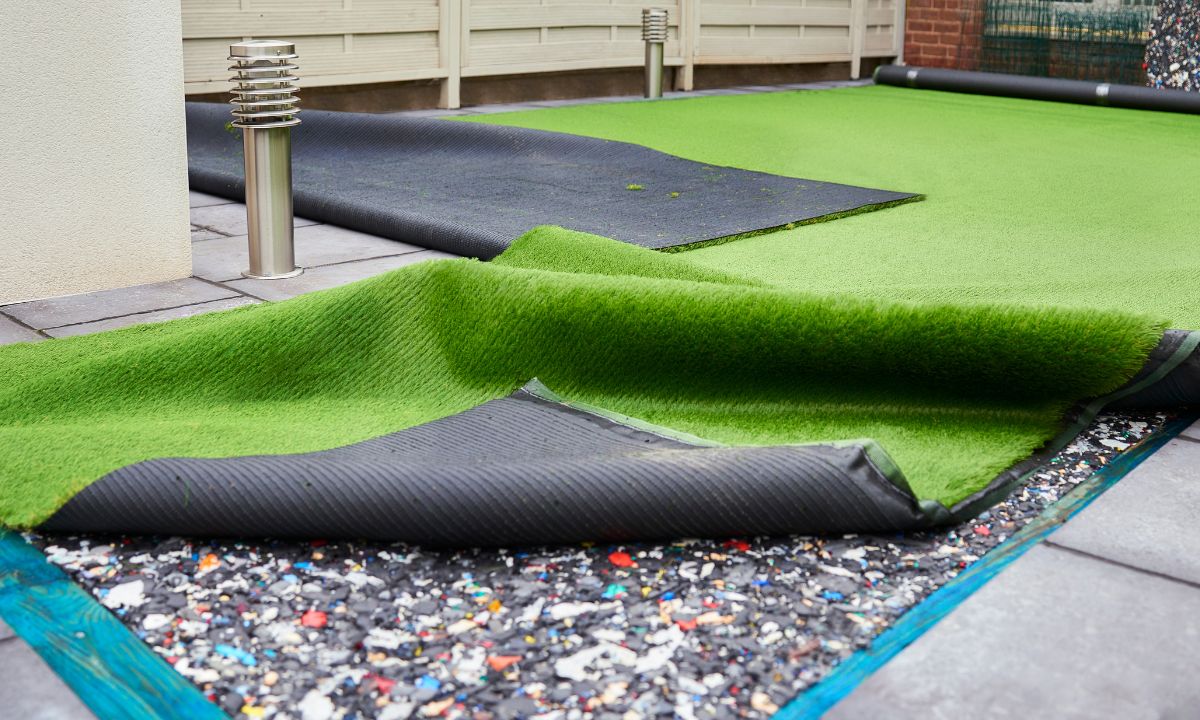
  2. Ground preparation: Clear existing turf, excavate 3–4 inches, create a compacted base with crushed stone or decomposed granite.

  3. Weed barrier and leveling: Lay geotextile fabric, ensure flatness, and maintain proper drainage.

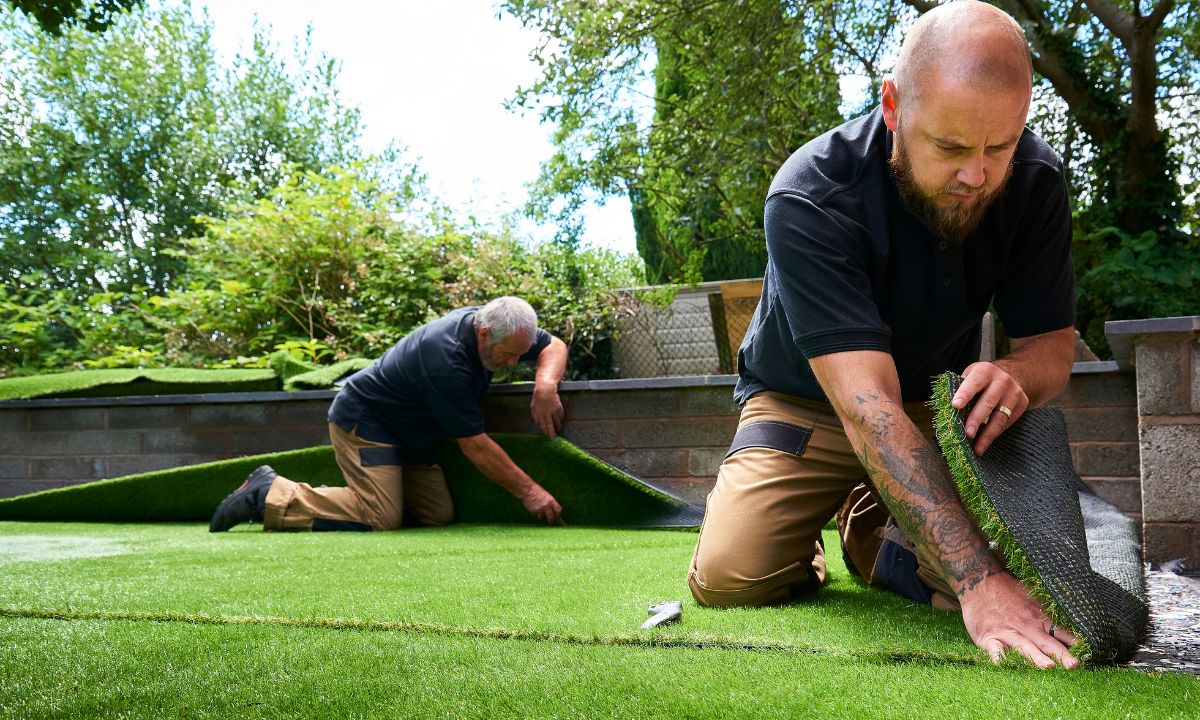
  4. Laying and securing turf: Align blade direction, adhere seams with tape or glue, and anchor edges.

  5. Infill and grooming: Apply silica sand or rubber granules; broom fibers upright for natural texture.

  6. Final touches: Clean up and quality-check—for a lawn that performs beautifully.

Professional installers—such as those from Discount Landscape—bring experience and efficiency to ensure these steps are done right, every time.

Conclusion

Artificial grass is more than a trend—it’s reshaping landscape architecture. With unmatched reliability, aesthetic appeal, and versatility, synthetic turf is a forward-looking choice. Whether transforming a concrete rooftop into a lush lounge, crafting a pet-safe home play zone, or providing a drought-resistant lawn that stays green year-round, Synthetic Turf Installation is proving to be a cornerstone of modern landscape design.

Artificial Turf Installation on a Budget – Affordable Yard Update

Artificial Turf Installation

Updating your outdoor space doesn’t have to break the bank. With strategic planning and smart choices, you can enjoy the lush, year-round appeal of synthetic lawn without extensive cost. In this blog, we’ll walk you through affordable, creative ways to elevate your yard feel, all while maintaining excellent value through Artificial Turf Installation.

Why Choose Artificial Turf Installation?

  1. Low Maintenance, High Appeal
    One of the biggest perks of Artificial Turf Installation is the elimination of mowing, watering, and fertilizing. Your yard remains perpetually green and pristine with minimal upkeep.

  2. Budget-Friendly Over Time
    Though the upfront cost may raise eyebrows, Artificial Turf Installation pays off in the long run. Say goodbye to water bills and lawn care services, making it a savvy financial investment.

Planning on a Budget

1. Select Cost-Effective Turf Options

Factories often offer budget friendly synthetic turf that looks realistic yet costs less. For Artificial Turf Installation, choose mid-range blends that balance durability and aesthetics—avoiding unnecessary premium features can cut costs significantly.

2. Do-It-Yourself vs. Professional Installation

While DIY Artificial Turf Installation might seem tempting, lack of proper drainage, uneven ground, or poor base prep can lead to costly mistakes. If you’re unsure, hiring a professional installer can save money in the long run by avoiding re-installation.

3. Prepare the Ground Yourself

Cut costs on labor by handling groundwork yourself—remove old grass, level the soil, compact the area, and add crushed stone or decomposed granite with a weed barrier underneath. These tasks are manageable for most homeowners and make a big difference in both durability and aesthetics.

Creative, Affordable Yard Updates

1. Combine Turf with Hardscape

Incorporate inexpensive elements like gravel paths, stepping stones, or mulch borders to break up turf expanses. This approach reduces overall turf square footage and adds visual interest—enhancing your Artificial Turf Installation in a cost-effective, stylish way.

2. Add Functional Zones

Set up zones within your turf design. For instance, include a small patio with affordable pavers or a gravel fire pit area. This not only makes the space more usable but also lowers cost burden on Artificial Turf Installation by reducing turf coverage.

3. Use Turf for Small, High-Impact Areas

Even covering small areas with turf—like play zones, dog run strips, or mini putting greens—can dramatically improve usability and look. These focused interventions are ideal if you’re budget-conscious yet still want the benefits of Artificial Turf Installation.

Smart Savings Tips

  • Buy Off-Season or in Bulk: Synthetic turf tends to go on sale during colder months. Purchase during clearance periods or combine multiple smaller zones into one order to enjoy bulk pricing.

  • Select Flat, Regular Shapes: Rectangular or square areas are easier (and cheaper) to install than complicated curves—perfect for a low-cost Artificial Turf Installation.

  • Re-Use Existing Edging or Landscaping: Utilize existing borders, walls, or plant beds as natural dividers to reduce additional materials and labor.

Eco-Friendly and Cheap to Maintain

Once installed, Artificial Turf Installation drastically cuts down water usage—especially crucial in drought-prone regions. Without regular watering, mowing, or pesticides, your yard stays beautiful, eco-friendly, and wallet-friendly simultaneously.

Final Thoughts

Affordable yard transformations are within reach when you couple thoughtful design with budget-savvy decisions. We offer a worry-free, beautiful alternative to real lawn, saving time, money, and water—especially when paired with strategic design and smart planning. Whether you’re updating a play area, creating a mini-green zone, or refurbishing your entire yard, it’s entirely feasible to do so attractively and economically.

Start by evaluating your space, exploring mid-range turf options, and deciding whether professional installation will actually save you in the long run. With the right approach, you can enjoy a lush, low-maintenance lawn that looks polished and costs far less than you might expect.

Artificial Grass for Front Yards: Curb Appeal without the Water Bill

Artificial Grass

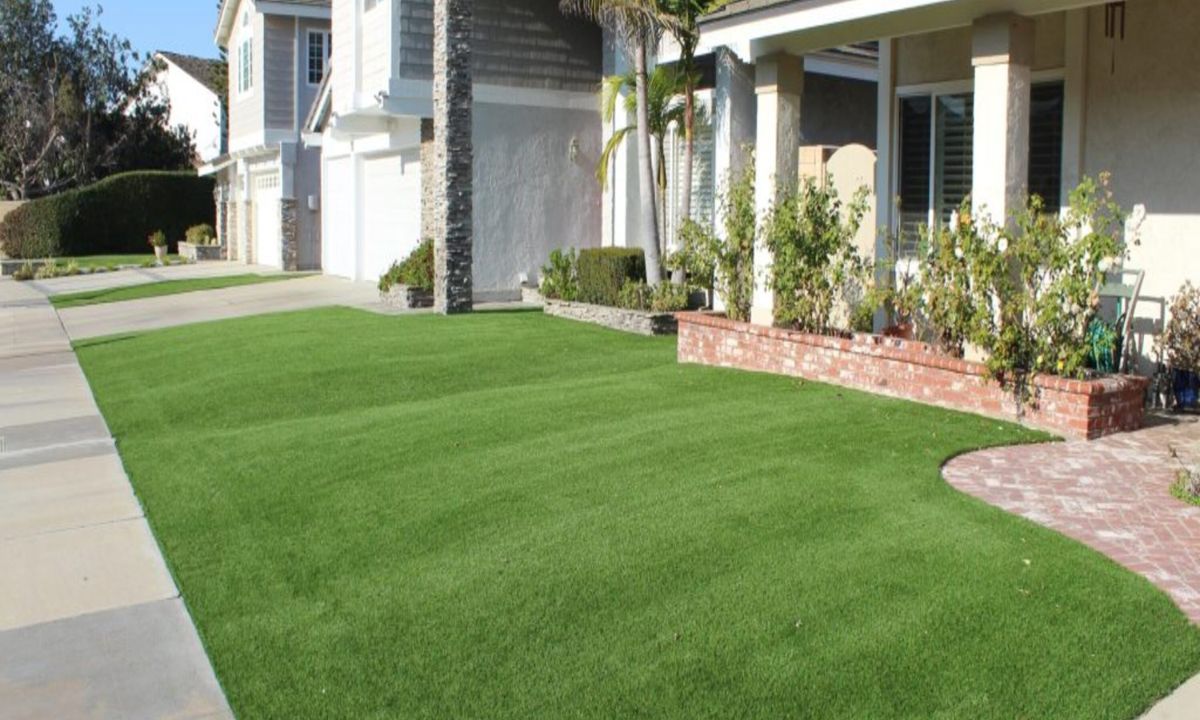
If you’re tired of spending weekends mowing the lawn, fixing brown patches, or watching your water bill climb during the summer, you’re not alone. More and more people are switching to artificial grass for their front yards, and it honestly makes a lot of sense.

Artificial grass is not just about making the yard look good. It is about saving time, reducing maintenance, and avoiding the stress that comes with natural grass upkeep. And let’s be real, in many places, keeping real grass looking green all year is almost impossible unless you’re throwing buckets of water on it every day.

Why Artificial Grass Is Catching On

The biggest draw of synthetic grass is that it always looks neat. Whether it’s been raining or scorching hot, your front yard stays green and tidy. No weeds popping up. No muddy mess after a rainy day. And you won’t have to wonder if the grass will survive summer again.

Artificial grass is especially handy in dry climates or areas with water restrictions. Some folks also go for it just because they don’t want to deal with sprinklers, trimming edges, or dealing with pests hiding in the lawn.

Does Artificial Grass Really Look Fake?

This is one of the first questions that comes up. And no, it doesn’t have to look fake. Today’s synthetic grass options come in different shades, textures, and even lengths. Some even have a touch of brown mixed in to mimic the natural thatch you’d see in real grass.

If you walk past someone’s yard and think, “Wow, that grass looks amazing,” chances are, it might be fake, and you didn’t even realize it.

What About Installation?

Installing artificial grass isn’t something you just roll out and forget. The ground underneath needs to be leveled, a drainage layer usually goes in, and the grass itself needs to be pinned down properly so it doesn’t shift.

If you’re into DIY projects, you can do it yourself, but a lot of people prefer getting it done professionally. Especially for front yards, where looks really matter.

Is It Environmentally Friendly?

This one surprises people. In many ways, yes, it is. No need for watering. No chemical fertilizers. No noisy gas-powered mowers. That’s a significant amount of fuel and water saved over the years.

Some newer turf products are also made from recycled materials and are recyclable themselves. So it’s not just low maintenance and it can also be a greener choice than real grass that constantly needs resources to survive.

Final thoughts

If your goal is to have a front yard that always looks fresh, without constantly having to care for it, artificial grass is definitely worth thinking about. It may not be for everyone, of course. Some people love the smell and feel of real grass, and that’s totally fair.

But if you’re just looking for a simple way to upgrade your yard, cut down on water use, and make your home look polished from the outside, artificial grass is a smart option.

Frequently Asked Questions

How costly is artificial grass?

The upfront cost can feel high, especially compared to just throwing down some real sod. On average, you’re looking at $8 to $15 per square foot if you go with professional installation. But no watering, no fertilizing, and no maintenance bills after that mean you eventually save money. Most people say it pays for itself in a few years.

What is the lifetime of artificial grass?

Good quality artificial grass can last between 10 and 20 years. If it’s in a high-traffic area, it might show wear a bit earlier, but it generally holds up really well. Most options are UV-resistant too, so they won’t fade easily under the sun.

Is artificial grass permanent?
 Not really permanent, but it’s made to stay put for a long time. If you ever want to switch it out or remove it, you can. It’s not stuck forever, but it also won’t shift or come loose unless something was wrong with the installation.

Can You Install Artificial Turf Over Concrete? Yes, and Here’s How!

If you have a dull-looking patio, balcony, or rooftop covered in concrete and you’re thinking, Wish I could turn this into something greener – you absolutely can.

We’ve done it for homes, businesses, even some play schools. Putting artificial grass over concrete is not just possible – it’s a smart move in a lot of situations.

Let me walk you through it. No fancy talk, just how it works in real life.

Why Would You Want to Do This?

Most of the time, concrete is hot, hard, and unattractive. Maybe you’ve tried painting it or adding tiles. Still ends up looking like a sidewalk. Turf can change this.

Some reasons our clients go for it:

  • No mud, no mess
  • No need to tear anything up
  • Looks way better instantly
  • Comfortable underfoot
  • Pets love it (and it’s easy to clean)

Perfect for spots where natural grass just isn’t going to grow.

What We Do When Installing Turf on Concrete

This part’s important. Turf can’t be just tossed down and walked away from. Here’s what we typically do to make sure the turf looks nice and lasts long:

Step 1: Clean the Concrete

We start by washing off any dirt or oil. Pressure washer if needed. If there’s anything stuck, like paint or moss, we get rid of it.

Step 2: Fix Any Cracks or Bumps

We smooth out the surface as much as possible. We patch any unevenness.

Step 3: Add a Foam Underlay (Optional)

Not mandatory, but if you want it to feel soft, especially if kids or pets are using it, we’ll lay down a thin padding underneath. Makes a big difference.

Step 4: Roll Out the Turf

We measure, cut it to fit, and lay it down carefully so the grain all runs the same way.

Step 5: Secure It

We use strong adhesive around the edges to secure it. No staples here—concrete doesn’t allow that.

Step 6: Infill

This part’s not always needed on concrete, but adding sand or rubber infill helps the turf stay in place and keeps the blades standing up straight.

Step 7: Brush It

Last thing we do is brush it out so the grass looks full and natural.

Is It Really Worth It?

Short answer: yes. It completely changes the atmosphere of the place. You can sit on it, walk barefoot, and let the dog out. It becomes an actual usable space.

It doesn’t require watering, weed control, or lawn care. Just hose it off every now and then if it gets dusty or if the dog does what dogs do.

Where Does This Work Best?

We’ve installed turf over concrete in:

  • Rooftops
  • Patios
  • Driveways
  • Around pools
  • School play areas
  • Cafes and outdoor seating spots

Basically, if it’s flat and doesn’t have water pooling, we can do it.

A Few Things to Watch Out For

  • Drainage – If your concrete doesn’t drain well, we need to fix that first or use a product that lets water move underneath.
  • Heat – In peak summer, grass may become warm. There are cooling infills available if that’s a concern.
  • Surface Condition – Really busted-up concrete might not be a good base. We’ll tell you straight if it’s not worth it.

Final Thought

Turf over concrete is something we’ve been doing for years. It’s quick, clean, and lasts a long time if it’s done right.

You don’t have to spend a fortune or rip out your entire slab. In just a day or two, your space can go from boring grey to green and inviting.

If you’re in Woodland Hills or anywhere nearby, give us a call at Discount Landscape. We’ll take a look, give you honest advice, and if you want to move forward, we’ll handle it from start to finish.

Contact us today.

Why Artificial Grass Is the Secret Weapon of Modern Landscape Designers

Contemporary landscape designers in California are also developing the tendency to use artificial grass as a means of achieving the most striking landscapes that meet the demands of the clientele and focus on modern environmental and maintenance issues as well. This artificial mixture has transformed the way designers go with residential and commercial designs.

Creative Design Flexibility Without Natural Limitations

Artificial grass gives landscape designers an artistic creativity they have never experienced before because they can now be as creative in their design execution free of the limitations, the natural grass puts on the design idea.

The use of traditional Grass involves certain conditions of soil, drainage, exposure to the sun and time of maintenance, which in most cases, reduces the designing options.

Artificial lawns are possible in the areas where the natural lawn would have difficulty growing or would never grow at all and designers can include the rich green presence into the environment.

Artificial grass will allow designers to blend the outdoor and indoor life comfortably without any faults, as its appearance remains the same even during bad weather or any change in seasons.

That dependability facilitates the introduction of all-weather exterior leisure zones, rooftop gardens and covered regions where normal grass does not set up beneficial growth practices.

Instant Visual Impact and Guaranteed Results

Artificial grass has proved beneficial to modern landscape designers because of the instant change it offers to the outdoors. This direct effect is especially useful on commercial projects that have short deadlines or at a residential location where clients want to use their new outdoor space.

Artificial grass always looks the same, which means the designers could be sure to show the vision of the project to the clients without thinking about the effects of seasonal changes and drought stress on the final product, and being nervous about any maintenance problems.

Such predictability has given designers the freedom to concentrate in generating magnificent landscapes without having to fear about influencing factors that are beyond their control which might quickly mess up the result of the project.

Solving Complex Site Challenges

Landscape designers often encounter challenging sites where traditional landscaping materials struggle to perform effectively.

Artificial grass provides solutions for problematic areas including steep slopes, heavily shaded spaces, high-traffic zones, and areas with poor soil conditions.

These challenging sites no longer limit design possibilities when synthetic turf becomes part of the material palette.

Heavy foot traffic areas that would quickly damage natural grass can accommodate beautiful green spaces using artificial grass designed specifically for high-use applications.

This durability enables designers to create functional outdoor spaces for commercial properties, playgrounds, and entertainment areas without sacrificing aesthetic appeal for practicality.

Enhanced Project Value and Client Satisfaction

Artificial grass installations provide long-term value that enhances the overall success of landscape design projects.

The minimal maintenance requirements of synthetic turf mean that clients can enjoy beautiful outdoor spaces without the ongoing costs and time commitments associated with natural grass care. This low-maintenance characteristic particularly appeals to busy homeowners and commercial property managers.

The durability of quality artificial grass ensures that landscape designs maintain their intended appearance for 15-20 years with minimal intervention.

This longevity protects the designer’s reputation and provides clients with lasting value from their landscape investment. The consistent performance of synthetic turf installations creates satisfied clients who become valuable references for future projects.

Integration with Smart Landscape Technologies

Artificial grass integrates effectively with modern landscape technologies including automated irrigation systems for surrounding plantings, landscape lighting, and smart home integration features. The stable surface provided by synthetic turf installations supports outdoor entertainment systems, automated shade structures, and other technological enhancements that clients increasingly request.

10 Surprising Places You Can Use Artificial Grass

Artificial grass has come a long way to be able to provide flexible solutions to areas you will never expect. The synthetic turf with its hygienic and low-maintenance characteristics is the perfect solution used in many unanticipated areas around the state of California and elsewhere.

1. Indoor Pet Areas and Mudrooms

With the help of artificial grass, it is easy to come up with special pet areas within your household. Homeowners in California have learned that they can lay out synthetic grass in mudrooms, washrooms, or specific areas where pets are intended and have a clean and cozy surface for their pets can play on. The track of mud and other dirt on shoes is wiped because the synthetic turf does not smell nice, and the synthetic grass has a familiar feel to the pet under its paws.

2. Children’s Playrooms and Nurseries

Innovative parents are using artificial grass in kids’ playrooms and nurseries; they are also creating a soft area of play.

The padded support is very safe in case of a fall, and the synthetic covering makes it a hygienic crawling ground as well as the play area of young children who are full of energy.

The application is outstanding especially in basements that have been converted as play areas, whereby the clean surface of artificial grass will remain green irrespective of lighting conditions in doors.

3. Rooftop Gardens and Terraces

City life in California is usually synonymous with a lack of open space, and the placement of manmade grass on the roofs is bringing change to the city houses.

Sky gardens and rooftops are the perfect locations to take advantage of synthetic turf since these locations are usually not heavy enough to accommodate more conventional and natural landscaping.

The artificial turf does not require heavy laying as is the case with natural grass; hence properties owners do not have to worry about establishing a lush green lawn; moreover it can endure sustained sunlight, wind, and wide temperature changes that would otherwise strain natural grass.

4. Poolside and Deck Surrounds

Swimming pool surrounds present unique challenges for landscaping. Constant splashing, chlorinated water, and heavy foot traffic create harsh conditions for natural grass. artificial grass‘s clean properties shine in these environments, as the synthetic fibers resist chemical damage and drain effectively.

5. Balconies and Apartment Patios

Small outdoor spaces like balconies and apartment patios benefit tremendously from artificial turf installations. These areas often have concrete floors that feel cold and uninviting, but synthetic grass transforms them into cozy outdoor retreats.

The artificial grass clean surface requires no soil, reducing weight concerns for upper-floor installations while creating an instant garden atmosphere that requires minimal maintenance.

6. Restaurant Patios and Outdoor Dining Areas

The hospitality industry has discovered artificial turf’s potential for creating inviting outdoor dining spaces. Restaurant patios benefit from the consistent appearance and easy maintenance that synthetic grass provides.

Unlike natural grass that can become patchy or muddy during busy periods, artificial turf maintains its pristine look regardless of foot traffic, making it perfect for high-traffic commercial applications.

7. Retail Store Displays and Showrooms

Forward-thinking retailers use artificial turf to create eye-catching displays and customer engagement areas. Garden centers, outdoor equipment stores, and even fashion retailers have incorporated synthetic grass into their showroom designs to create memorable shopping experiences. The artificial grass’s clean surface provides an attractive backdrop that photographs well and requires minimal upkeep between display changes.

8. Office Spaces and Corporate Environments

Modern office design increasingly incorporates biophilic elements, and artificial grass offers a practical way to bring nature indoors. Break rooms, reception areas, and even meeting spaces can benefit from synthetic turf installations that create calming, natural environments without the maintenance challenges of living plants.

9. Event Venues and Wedding Locations

Event planners have embraced artificial turf for creating stunning outdoor ceremony and reception spaces. Whether creating temporary installations for special events or permanent features at wedding venues, synthetic grass provides an elegant foundation that photographs beautifully. The artificial grass’s clean surface handles heavy foot traffic from guests while maintaining its appearance throughout long events.

10. Garage Floors and Workshop Areas

Perhaps the most surprising application is using artificial turf in garages and workshop spaces. This creates a comfortable surface for working on projects, reduces dust, and provides insulation from cold concrete floors. Many California homeowners have discovered that synthetic grass in garage areas creates a cleaner, more pleasant workspace while being easy to clean and maintain.

Is Artificial Grass Better for Sports Fields

The use of Artificial Turf on sports fields has grown exponentially in recent years due to the demand for improvements in consistent performance and a decreased maintenance burden. Its increasing use across numerous sports has made it necessary to assess its durability and performance against natural turf.

So, let us dive deep into the use of artificial grass over natural turf for sports fields.

Why is Artificial Grass Favored for Sports Fields

Performance Factors and Playability

Artificial Turf is preferred for its performance characteristics across a variety of weather conditions. Natural grass is susceptible to mud, puddles, and bald spots which lead to the possibility of inconsistent traction and behavior of the ball.

For many sports, such as soccer, where ball roll and bounce are of utmost importance, Artificial Turf can provide consistent performance parameters.

Artificial turf will also provide a flat and compact surface which minimizes the chances of injury due to uneven footing.

Considerations of Durability and Maintenance

High-quality installations of artificial turf can last from 8-12 years. Additionally, Artificial Turf provides a surface that holds up to a very high usage rate. Some fields might have multiple teams on them during the same day, tournaments, or community events that take advantage of the no recovery time needed for synthetic surfaces.

It still needs regular maintenance which includes brushing to displace infill materials, cleaning objects off the field, and sanitization. It generally takes fewer resources than traditional grass maintenance like mowing, fertilizing, or sod replacement.

Long Term Savings

While the upfront cost of Artificial Turf is higher than sod grass, the long-term savings on water, labor, and chemicals are favorable when considering Artificial Turf. You do not have watering costs, or the costs of pesticides, while using Artificial Turf is great to be environmentally conscious if you are in a drought situation.

Innovators have also sought to respond to these issues with recyclable materials, and other systems like cooling infill. As sustainability becomes more important, there are more sustainable/eco-friendly alternatives to the current Artificial Turf systems, including turf made from bio-based or partially recycled materials.

Sport-Specific Adaptations

Sports are different, requiring differing athletic performance requirements; Artificial Turf systems are quickly coming up with solutions for these sport-specific performance requirements. For example, football turf requires shock absorption and traction, whereas field hockey turf requires speed and accuracy.

Nowadays, Artificial Turf manufacturers are making sport-specific products available, with the correct fiber density, infill depth, padding, etc.

This customization will allow each sport to take full advantage of the playing conditions, decrease the risk of injury, and ensure the best opportunity for athletic performance. In addition, it reinforces the adequacy of Artificial Turf as a solution for changing sport-specific requirements in the sporting infrastructure.

Installation Process

The development of Artificial Turf fields is a multi-layered process completed using several layers of material that ensure both performance and longevity. The first layer is comprised of the base of the field using compacted stone and drainage layers that prevent stormwater from accumulating and causing field damage.

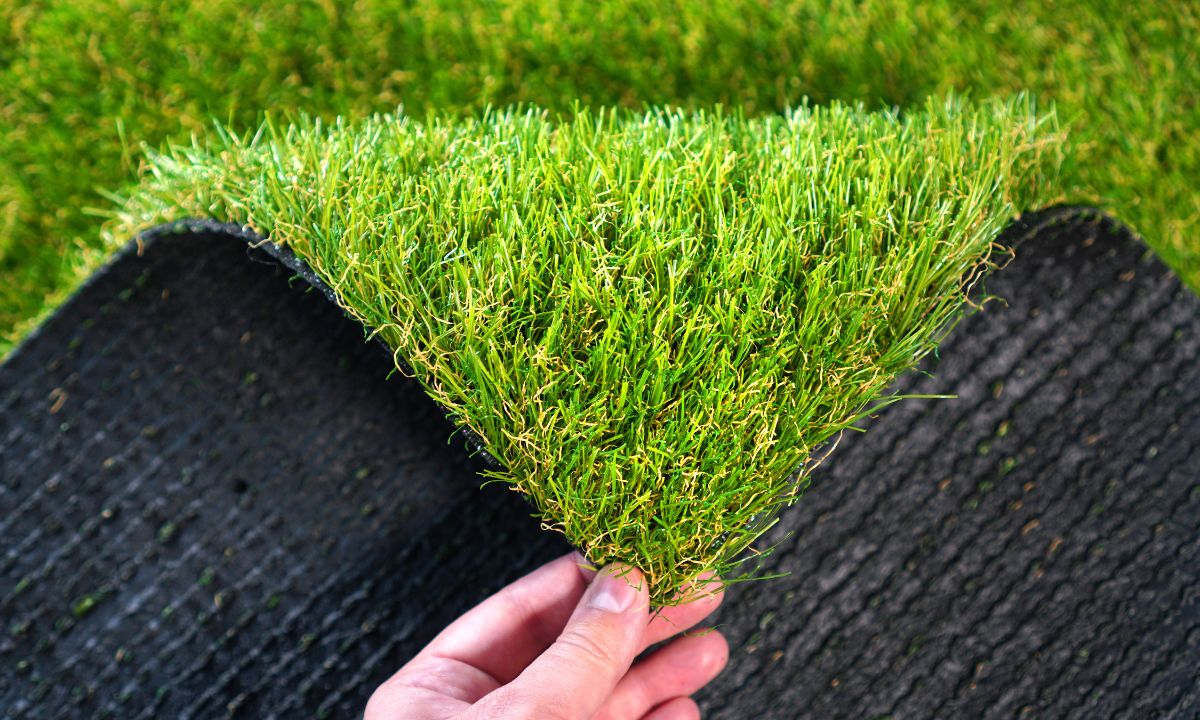
The second layer just above the base is the shock pad core layer which absorbs shock and lessens the risk of injury to both athletes and spectators when engaged in contact sports. The actual turf layer is made using synthetic fibers such as polyethylene or polypropylene that are tufted into a backing material.

The surfacing of the field infill which includes a ratio of silica sand & rubber granules is then dispersed over the surface allowing for some support of the blades and assisting in shock absorption.

So, if you wish to install artificial turf in your homes in Woodland Hills, contact Discount Landscape today.

Why Synthetic Turf and Artificial Grass Are the Future of Landscaping

With landscaping going green and seeking low-maintenance solutions, synthetic turf and artificial grass are establishing themselves as a front runner solution for homeowners, businesses, and municipalities.

The wallpapers in the series present the frontiers of advanced landscaping materials to offer functionality, beauty, and environmental advantages, all of which traditional lawns fail to. So, let us look at how synthetic turf and artificial grass are the future of landscaping.

Important Features of Synthetic Turf

Water Conservation and Environmental Impacts

Among the several major advantages of artificial grass stands water conservation. Natural grass, indeed, requires a lot of irrigation and in many dry areas, can use thousands of gallons of water per lawn, whereas synthetic turf requires none at all.

Owners of properties therefore have the opportunity to cut their water bills enormously while saving a valuable resource in natural water. Further, as pesticides and fertilizers are not required for maintaining synthetic turf, they prevent harmful chemicals from entering the nearby water systems through runoff, ensuring the environment is protected.

Cost-Effective and Low Maintenance

Though upfront installation costs of synthetic turf may be much higher than those of natural grass, the advantages in the long run are immense. To start, maintaining artificial turf does not require any watering, mowing, or fertilizing to maintain itself. This results in massive cost savings on maintenance as well as the required effort.

Other than its low maintenance requirements, synthetic grass is also more sturdy and less prone to damages under heavy traffic situations. All of these features help tremendously in saving repair costs which can quickly add up when having a natural turf and grass.

Strength and Tolerance to Heavy Foot Traffic

Wear and tear due to constant usage crimp public parks, sports grounds, and playgrounds. Synthetic turf has been made to withstand a heavy flow of foot traffic without developing bare spots or patches of mud. Natural turf is comprised of loose mud and sand, which get easily molded when heavy traffic is present on them.

Because synthetic turf is built tough, it remains intact and attractive even in less than ideal conditions, making it a commercial choice for high-traffic zones where both looks and function must be preserved. It is further aided in its dual role by resisting compaction and allowing quick rainwater drainage, suitable for both commercial and residential uses.

From the Esthetic Versatility Point of View

Synthetic grass and artificial turf are made with all the features of natural grass which makes it indistinguishable. They come in different shades, blade lengths, and textures to suit almost any design orientation.

Landscape architects often use artificial grass in making aesthetically pleasing lawns, rooftop gardens, indoor green zones, and commercial building decorations. This versatility is a blessing for synthetic turf in any kind of modern landscaping project, marrying the functional with the visual.

In All Seasons And Weather Usability

The operation of natural lawns is interrupted when there are adverse conditions like mud, drought, and snow. Unlike such, synthetic turf offers an all-season usable surface. Extreme temperatures do little to affect it, and while it retains color and texture, it does not become slippery or uneven.

Children and pet-owning families can benefit from its consistent usability, who otherwise would have been restricted from focusing on outdoor activities in unfavorable weather.

Also, event venues and recreational areas similarly benefit from artificial grass being reliable and less time-consuming in maintenance. They are always ready for action when it comes to safety of use in every situation.

So, if you are looking to install synthetic turf and artificial grass at your homes in Woodland Hills, contact Discount Landscape today.

A Step-by-Step Guide for Installing Synthetic Turf

Using synthetic turf is a great way to develop and maintain a fabulously lush lawn with virtually no work involved while ensuring it remains beautifully green all 12 months of the year. Through proper planning you can ensure that even the novice home-owner can have success in the materials and installation of artificial grass.

So, let us look at a step-by-step guide for installing synthetic turf.

How to Install Synthetic Turf

Measuring and Planning

The first step in installing your synthetic turf is to measure and plan the area you will be installing in. Take a tape measure and establish the dimensions for the area so that you can calculate the square footage in order to make a purchase of artificial grass.

Make notes of irregular shapes, and measures of obstacles such as trees, pathways, flower beds, precluding any surfaces that result in damage to some installations; also consider any other aspects before heading to the next step.

Excavation and Base Preparation

After planning, it is time to prepare the site to receive the base materials and begin to remove any existing grass, weeds, or debris. The next step is to excavate the area to a depth of approximately 3 to 4 inches to accommodate the base materials.

Next, fill in the excavated area to level using crushed stone or decomposed granite base materials, which ultimately provide stability and drainage. This will be filled to a thickness of approximately 2 to 3 inches and compacted evenly.

Install a Weed Barrier and Base Smoothing

Before laying artificial grass, you will want to install a weed barrier fabric over the compacted base. The weed barrier fabric aids in weed prevention and provides drainage. Once you have installed the weed barrier, you will have to smooth the surface using a leveling rake and it has to be level.

Check for any low spots that won’t allow proper drainage, and fill in any areas to ensure flatness. In the end, you want to ensure that the synthetic turf will lay properly and look as natural as possible once installed.

Installing and Securing the Synthetic Turf

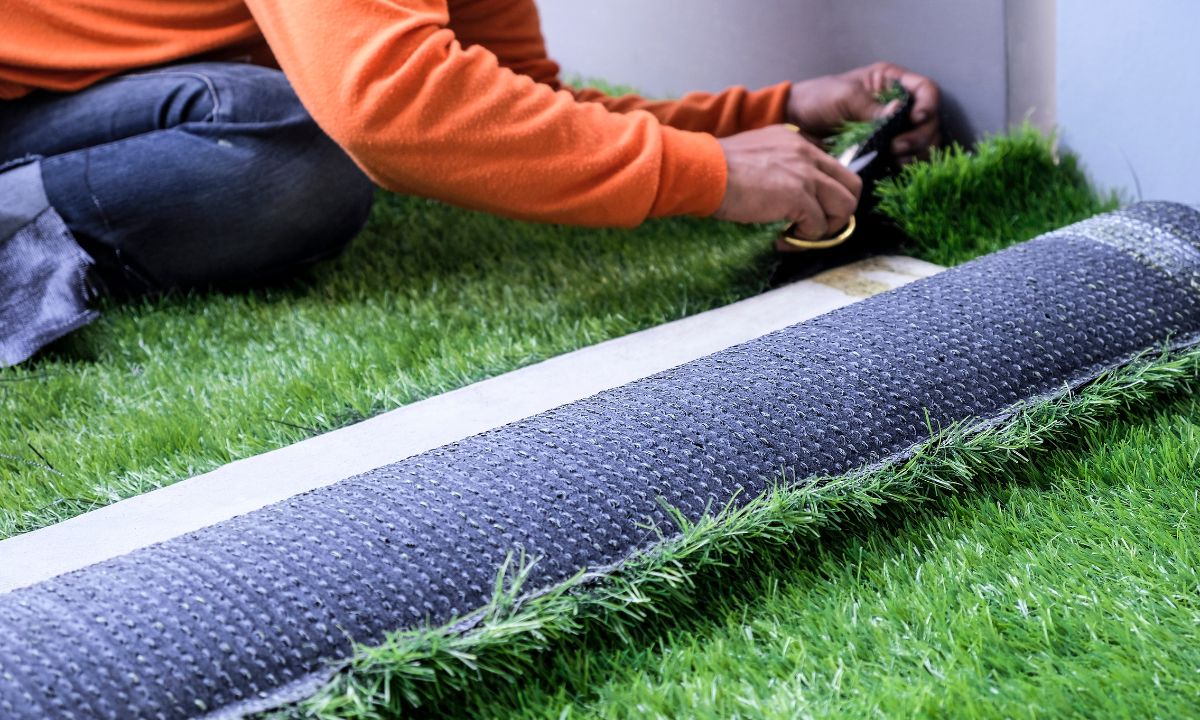
Lay the synthetic turf over the prepared area, making sure to orient the blades in the same direction for a consistent look. Allow the turf to lay in a place for several hours to minimize wrinkles or folds. If there are several rolls, guarantee the seam is aligned properly and trim any excess with a utility knife.

Use joining tape and adhesive to bond the seams. After this, you can place the landscaping nails or staples to secure your perimeter. Make sure that they are placed at least 6 to 8 inches apart from each other. This will ensure the artificial grass remains secured and does not shift as time goes on.

Final Grooming

The last step in the installation of synthetic turf is adding the infill material such as either silica sand or rubber granules. The infill is used for support of the grass blades, cushioning and drainage.

After that the infill must be evenly distributed over the surface. You can use a drop spreader to achieve this. Then, broom the turf with either a power broom or stiff bristle broom to work the infill into the base of the blades.

This process makes the synthetic turf stand in a vertical position and takes away the shiny look of the synthetic turf. It is advised that you hire professionals to install synthetic grass if you are looking to install it in your home.

So, if you are looking for a professional synthetic turf installation service in Woodland Hills, contact Discount Landscape today.

How to Prepare Your Yard for Artificial Turf Installation

The surface needs minimal maintenance while delivering a visually pleasing appearance throughout the year after an artificial turf installation. A successful artificial turf installation with optimal conditions and extended lifespan requires implementing an entire set of steps. The following steps should be your first action to prepare for artificial turf installation in your yard.

Assess the Area

Before starting you must analyze all aspects of your yard including dimensions and format. Begin by determining the space size you want to transform into turf. Measuring the area will show you how much turf you must buy.

Check the area for potential obstacles such as trees along with rocks and irregularities of the terrain. The installation procedure becomes challenged by ground-level obstacles that demand additional work to solve them. The installation procedure becomes simpler when the area is flat with no obstacles while maintaining proper turf levelness.

Remove Existing Grass and Debris

One of the first steps in preparing your yard is clearing away the existing grass, weeds, and any other debris. You must provide a nice, clean surface for the turf to sit on.

To do this:

  • To clear grass, use a shovel or a hoe.
  • A sod cutter can be very effective if your yard has thick grass or sod.
  • Don’t forget to clear any rocks, sticks, or trash that could interfere with the turf.

Removing all the existing vegetation is crucial because any leftover roots or weeds could push through the turf over time.

Grade the Surface

Grading the surface means that you will have to level the ground in order to ensure proper drainage. If the ground is uneven, water could pool in certain spots, leading to issues like mold or turf damage.

To grade your surface:

  • Use a rake to spread the soil evenly across the area.
  • Try to create a slope that is gentle, ideally 1-2% grade, to direct water away from structures.
  • Check the surface with a level to make sure it’s even.

If your yard has low spots, you might need to add extra soil or sand to raise the area. The primary objective is to create a flat, stable surface for the artificial turf installation.

Install a Weed Barrier

A weed barrier fabric needs to be installed before proceeding to the next step. The weed barrier fabric will protect your artificial turf as it prevents weed growth through it.

Pick a premium landscape fabric that enables water drainage but stops weed development. The fabric needs to cover the whole surface area where turf installation will happen.

Make sure the edges of the fabric overlap to avoid any gaps. Landscape staples are a great option to keep the fabric in place.

Lay a Solid Base

A firm base is very important for durability as well as drainage. The base material, typically crushed rock or gravel, provides stability and allows water to drain properly.

Here’s how to create your base:

  • Spread 2-3 inches of crushed rock or gravel around the area.
  • You can use a rake and level it to make sure that the base is equally distributed.
  • Use a plate compactor to ensure the base is stable and firm.

The compacted base will also help to prevent any shifting of the turf in the future. It’s essential to make sure the base is solid before proceeding to the next step.

Plan for Drainage

Proper drainage is very important for the longevity of your artificial turf. Without it, water could pool on the surface, leading to turf damage or odor problems.

To ensure good drainage:

  • Maintain the 1-2% slope you created earlier, which will help water run off the surface.
  • If necessary, install drainage pipes under the turf or along the edges of the yard to direct excess water away from the area.
  • You can also add perforated pipe or gravel along low spots for better water flow.

Conclusion

Effective preparation functions as the essential element for installing artificial turf successfully. The proper implementation of these steps will enable your artificial lawn to maintain excellent appearance while providing an extended lifespan. You should either hire an artificial turf installation expert or consult with them if any of the installation steps are unclear to you.